Sunday, March 13, 2011

Sin Ozone

I just realized why I had a flip-flop tan after El Tigre. It had really confused me, as I usually only get them in the dead of summer at home when I spend 24/7 at the beach. Well, mystery solved.


I completely forgot this but there is no ozone layer over Argentina! I'm not sure if it is all of Argentina but definently a good part of it; "As the ozone hole over Antarctica has in some instances grown so large as to reach southern parts of Australia, New Zealand, Chile, Argentina, and South Africa, environmentalists have been concerned that the increase in surface UV could be significant.[24]" WIkipedia.

Duh! No wonder a lot of people here look like tan french models. Its because just walking a couple blocks to their house or work is a tan in itself. No need to go to the beach. Just walk a few blocks. Time to invest in some sunscreen before I end up with some nice melanoma.

Jugo de Naranja

Ok you are not going to believe this. I almost can't believe this myself. The orange juice here in Buenos Aires is to die for. It is the fresh kind with the pulp and everything, the kind I like. When one goes to a cafe and orders a coffee, usually a little cup of orange juice comes along with it. It is good but not enough. A big glass of orange juice in a cafe is around 16 pesos, which is 4 dollars. Not bad. But you can also get fresh squeezed orange juice on the street corners.


To crib this unknown guy's picture off the internet, it shows a juice stand on the street. Most are a little more simple, a cart with only the oranges, the juice squeezer, and the man or lady behind it. The price?


5 PESOS!!!! It can vary. For a medium coffee cup amount of fresh juice, this is a deal breaker and an amazing way to get your daily Vitamin c!!!

Carne!

Buenos Aires is known for its high quality meats, and it is justifiably so. While my host mom doesn't make too much meat (i think there is some weird fixation with atun(tuna), i've ordered meat twice when dining out with friends. And their meat is soo good and cooked just perfect.


(the first time at El Tigre)

The first time I had a parilla (mixed grill) when when I was at El Tigre with my friends. On of the guys and I decided to split one,mainly because it would have been expensive to each get a single one. Our waitress assured us that there would be enough food for the both of us. Boy, was she right. The parilla came sizzling in on a mini grill set in the center of the table. Piled on the mini-grill was chicken, steak, chorizo (sausage), blood sausage, something we think was brain and the other was possibly liver (sweetmeats?), ribs, more steak, and i think, flank steak ( the really thin one that could be used in a pulled pork sandwich but cow). Everyone's eyes in the group just bulged. I thought; "dang, what did we just get ourselves into?"


I ended up really enjoying it, despite the massive amount of carne just sitting there. It was enough to turn someone vegetarian on the spot. I even tried a bit of the blood sausage. the texture was really smooth and it tasted kind of savory, like someone stuck some cinnamon and christmas spices in it. I did NOT touch the sweetmeats.

Last night we went to a restaurant and i split some steaks with some friends. They were really good; the meat was tender and juicy although it was a little rare for me. Some of the pieces were more well done but it didn't taste as good. No matter what people say, los portenos can cook some meat!
(I'm not sure if it is pricey or not. the first time when I split it, i paid 55ish pesos. The second time was about the same. so not bad, in my opinion.

Tuesday, March 8, 2011

El Tigre

Yesterday, I went with a group of my friends from the program to el Tigre. All of us, for various reasons, didn't decide to travel anywhere far away for the long weekend. Some of my friends had already planned this, so for me, it was spontaneous but so worth it.
The train Station at El Tigre


At the beginning, the forecast was for overcast clouds and rain. I brought my umbrella just in case.


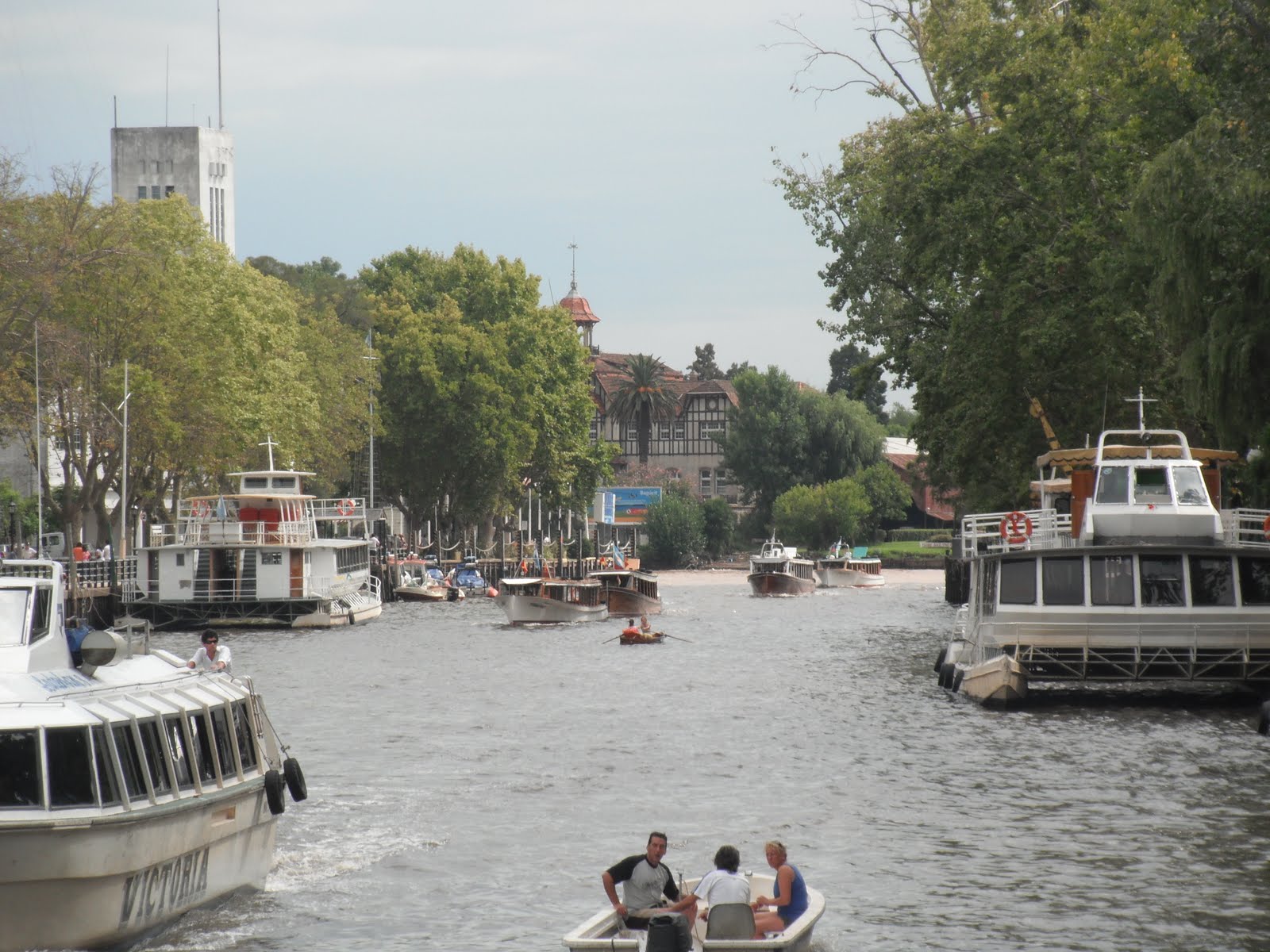
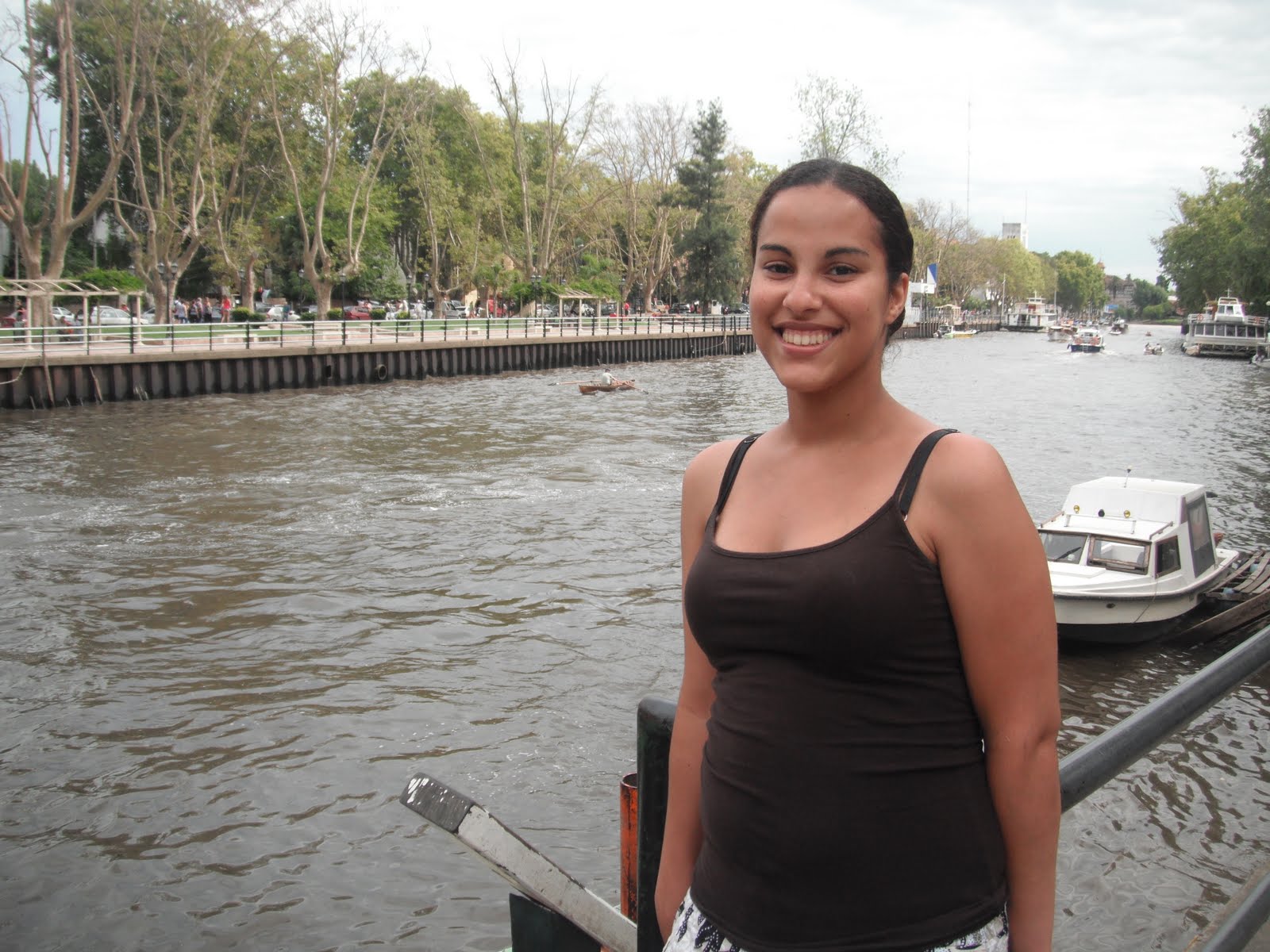
El Tigre is the delta region of the ParanĂ¡. It is famous for its myriad islands and waterways, most which host tiny summer homes. Many people from Buenos Aires come to escape the heat of the city for el Tigre, where they can fish, sail, sleep, row, buy crafts, or even visit the amusement park. There are a lot of rowing clubs situated in the area and many have boats, kayaks and canoes to rent for a couple hours during the day. The other popular option is the take a catamaran/boat tour down the delta.


I, with two of my other friends, decided to go find a kayak to rent. We walked up and down the dock for about a half an hour, trying to find a place that would let us rent a couple of kayaks for an hour or two. Every place we went to said that all of their boats were reserved, blah, blah, blah. Finally, after following a couple of leads, we found a place that was willing to rent us some kayaks. We were only able to rent 1 single and 1 double kayak for 3 hours, (which was the minimum for about 200 pesos). We kayaked across the river into one of the myriad inlets, where we saw many summer homes and camping grounds. There was even a small lake off on the inlets, where a lot of people went swimming. I did not go swimming, despite the fact that my skirt was already damp, mainly because I like seeing the bottom! (the river is brown and murky, not because its dirty, but because of the minerals in the mud). I thoroughly enjoyed my day at El Tigre. (Although now my shoulders are sore because of all the kayaking). There was so much sun that I even got a flip-flop tan, which hasn't happened in ages. ;)


To leave you with some words from Argentine author Jorge Luis Borges about El Tigre: "no other city do I know that adjoins a secret group of green islands, which get lost at unknown waters of such a slow river that literature called it frozen..."

Saturday, March 5, 2011

Riding the Bus

Riding the Bus here is Buenos Aires is an experience. There are two options one faces when about to board one of the buses here, known as collectivos. It is either crowded or half-empty.

If you are lucky, there are not very many people on the bus and you can even get a seat.

If you are unlucky or catch the bus at the time when everyone is going home, you face the Crowded Bus. The Crowded Bus is something out of claustrophobic's nightmare. You get on, tell the bus driver where you are going, pay your fare, receive your bus stub, and then face the crowd. You are expected to move to at least the middle of the bus, or back if you prefer. This involves a lot of murmurs of "perdoname" and squeezing past the people, your bag leading the way. ( An important feature of riding the bus is that if you have a backpack, you put the bag in front of you, like a baby sling, to prevent thievery. The same goes to your purse or messenger bag or whatever bag-like object you have.)

While you are squeezing past people, the bus has already been moving, which is often an erratic ride. Hence, a lot of the times, one has to grab ahold of the bars above or in front of you as the bus lurches forward. When you do find a spot to stand, you are usually squished in between two-three-four people. Just when you think relief has come because the bus lurches to the curb to drop off passengers, more people crowd the bus. It is an like a choreographed dance, where you move a little this way, hold on to this bar, let someone sidle past, grab onto the bar again, almost bump into the person next to you because of the driving, actually bump into another person, shuffle into a new space, grab a new bar to hold on to...the dance goes on. The only respite you have is when you get off or your stop is near the end of the line, which usually means less people. All the while, you have to keep one eye peeled as to where the bus is and where your stop is. The bus stops are not announced and one has to know by sight by either memorization or looking at the street signs as they flow by. All in all, it is a very unique experience.

Notes on Buenos Aires 2

I'm back with some more short musings on my time in Bs. As. so far.

1. Water is NOT free!!!!! Its sooo lame. I guess its a U.S. thing, but when you go to a restaurant, you have to pay for your water. And the water comes either sin gas or con gas. I like con gas because its like a cheap version of San pellegrino o Perierre. Also, when you go to the corner store and buy a drink, a lot of the juices come sin gas or con gas, which makes the juice more special.

2. The cheese on the pizza here is really good! they have a lot of pizza places here because of the italian influence ( there is even an italian section somewhere) and there are a lot of places which sell home-made pasta. I haven't eaten pasta here yet but I have hopes.

3. The traffic here is still killer-crazy and the people who ride motorcycles are absolute nutcases, they ride soo fast! at least they wear a helmet though.

4. I am always dehydrated here because of the lack of aforementioned water. I'm not saying I can't go buy some water, which I do, but it is never enough.

5. People drink coffee here after dinner. My host mom asked me the first two nights and then never again. But that's alright because I really don't like coffee. I kind of wish I did because they have a lot of cheap coffee here but oh well.

6. Money is sooo Cheap here for me!!! A 100 pesos is nothing!!! I need to ration my money. The exchange rate is 4 pesos to 1 american dollar, which is really good for us.

7. I went to the Japanese garden and will post pics later.

Thursday, March 3, 2011

Che the revolutionary

Tonight at dinner, my host mom and I started talking about Che, the revolutionary. (I am going to see a movie called Che this weekend). She commented that in the United States, people don't really like Che because he was a communist along with Castro in Cuba, and the U.S. definently does NOT like Cuba. While it is true that Cuba is a persona non gratis in the halls of power in Washington, I would still say that people like Che.


Che is a true idealist and revolutionary who fought for his ideas quite literally. He first fought in the Cuban revolution, and then went to Venezuela to help the fight there; a man who was ready to help anyone in the struggle for freedom and equality. The famous photograph of Che taken by the photographer Korda. Called Guerrillero Heroico, it was taken on March 5, 1960, in Havana, Cuba, at a memorial service for victims of the La Coubre explosion. But Korda's photo was more that just an image of a stoic rebel leader, he captured, i believe, the very ideal of revolution itself. He personified revolution through the image of Che. For the first time when people thought about revolution, one image came to mind, no matter where the revolution was. It became an image that everyone could own; an image that currently adorns every other dorm room in colleges across America. Much like the whole weed-smoking, Bob Marley listening phase that most college students go through, there comes a phase of obsession with heroic revolutionaries, counter-culture, intellectuals, and Che.

Who cares if he was a communist in Cuba? Sure, Castro is bad (not my view necesarily) but Che is cool! Just seeing him brings to mind revolution. Even if the use of his image gets blown out of proportion a little, (Smirnoff anyone?), it will always return to its true roots of revolution. Each person who discovers Che for the first time, I believe, becomes a little obsessed with his heroism, his gallantry, his idealism. (Motorcycle Diaries?) The intrepid few will even pick up one or two of his manifestos to read, thus claiming a snobby intellectual superiority over those who merely idealize him. I do realize though that those who have time to learn about Che is due to their own enthusiasm or because they are of a privileged class economically and socially. And besides, we need something to rebel about, so what is better than Che. Down with the establishment!

FInally, I will leave you with a quote:
"Che was the revolutionary as rock star. Korda, as a fashion photographer, sensed that instinctively, and caught it. Before then, the Nazis were the only political movement to understand the power of glamour and sexual charisma, and exploit it. The communists never got it. Then you have the Cuban revolution, and into this void come these macho guys with straggly hair and beards and big-dick glamour, and suddenly Norman Mailer and all the radical chic crowd are creaming their jeans. Che had them in the palm of his hand, and he knew it. What he didn’t know, of course, was how much that image would define him."